

The process for placing products on the market
Three due diligence steps and the due diligence statement
Common mistakes and how to avoid them
What the EUDR is and who it applies to
The EUDR (Regulation (EU) 2023/1115) is the EU Deforestation Regulation. It aims to prevent products linked to deforestation after a set cut-off date (they must not come from land deforested after 31 December 2020) from being placed on the EU market, and to ensure that they have been produced legally. It covers a wide range of commodities: wood, cattle (beef and leather), cocoa, coffee, oil palm (palm oil), natural rubber and soya, including products made from them (e.g. chocolate, furniture, paper, cosmetics, biofuels, tyres). The regulation affects companies of all sizes – from importers of raw materials and manufacturers of food, furniture or cosmetics to traders and exporters.
The EUDR entered into force on 29 June 2023, but its obligations apply from the end of 2025 (for most companies from 30 December 2025; micro and small enterprises have until 30 June 2026). It replaces the earlier EU Timber Regulation (EUTR) and extends the requirements to other commodities.
Key terms: operator vs trader
An operator (economic operator) is any natural or legal person that places a product on the EU market for the first time or exports it from the EU. Typically this is an importer from a third country or a manufacturer in the EU, but it can also be an exporter from the EU.
A trader is a company that buys and resells a product that has already been placed on the market, for example a wholesaler, retailer or distributor. Traders have simpler obligations: they ensure that the product’s flow can be traced (who they bought it from and who they sold it to), and they must not trade in a product that they know, or have reasonable grounds to suspect, does not comply with the EUDR.
If a trader imports a product directly from a country outside the EU, or from a company outside the EU, it becomes an operator for that transaction and must carry out full due diligence.
EUDR obligations differ depending on whether a company is a small or medium-sized enterprise or a large company.
Do you want to be sure your company can meet the new obligations under the EUDR (EU 2023/1115)?
Find out how EnviTrail can help you with implementation

Country risk classification
The country list is dynamic and is updated as new data become available. Companies need to monitor changes on an ongoing basis and adapt their due diligence system accordingly.
1. Low-risk countries
If the European Commission formally classifies a country as low risk (Article 29 EUDR), the operator does not have to carry out a full risk assessment or risk mitigation. However, the operator must still:
- collect all the basic mandatory information (geolocation, legal documents, HS codes, quantities, etc.),
- submit a due diligence statement (DDS) to the system before placing the product on the market.
In other words, the simplification applies only to the second and third steps of due diligence, not to collecting the data or submitting the statement.
2. Standard risk
If a country is classified as neither low nor high risk, the standard regime applies, with the full scope of obligations:
- obtaining all mandatory information,
- carrying out a risk assessment,
- taking any mitigation measures needed,
- submitting the DDS.
3. High risk
For countries classified as high risk the procedure is the same as for standard risk, but the regulation emphasises:
- more thorough verification and documentation,
- a heavier burden on the operator,
- and a higher level of checks by the supervisory authorities of the Member States (customs and inspection authorities).
Corporate sustainability news in your inbox
The process for placing products on the market
Before placing a product on the EU market or exporting it, every operator must:
- Set up a due diligence system and then handle the submission of the due diligence statement (DDS)
- It must be a formally established and documented system that is regularly updated and reviewed. It must include:
- Collecting product information
- Assessing the risk of non-compliance
- Mitigation measures where the risks are more than negligible
- All records are kept for at least 5 years.
- Carry out due diligence for every batch
Before each product is placed on the market, you need to:
- Obtain and keep: a product description, the quantity, the country of origin, geolocation data (including the plot polygon), the date of harvest or production, and documents proving legality (e.g. licences, export documents, legal title to the land).
- Assess the risks (including the geographical context, the presence of indigenous communities, the level of corruption in the area, the history of deforestation, the supplier’s reliability, etc.)
- If the risk is not negligible, take mitigation measures (e.g. additional documentation, verification of satellite data, supplier audits)
- Submit the due diligence statement (DDS)
- For each new batch, the statement is completed and submitted electronically (in the TRACES system). It must be submitted before customs clearance. It is not transferable – for example, if a company processes an imported commodity, it must submit a new statement for the processed product.
- Keep documentation and cooperate with the authorities
- All records, including risk decisions and the measures taken, are kept for at least 5 years. In the event of an inspection, the company must be able to show that every step was carried out correctly. Penalties can be as high as 4% of annual turnover.
- Take account of the exemptions for small companies
Three due diligence steps and the due diligence statement
In practice, due diligence under the EUDR consists of three main steps and concludes with the due diligence statement, the legal and administrative outcome of the whole process. This document is key: it is the official assurance, submitted to the EU system, that the products imported or placed on the market meet the EUDR requirements, i.e. that they are deforestation-free and legally produced.
The first step is to collect all mandatory information about the product and its supply chain. This includes the exact geolocation coordinates of every plot of land on which the commodity was grown or harvested, and evidence that no deforestation or forest degradation has taken place there after 31 December 2020. You also need documents proving the commodity’s legal origin – for example title deeds, logging or felling permits, evidence of land-use rights, valid licences or producer registrations. Another important element is the exact identification of the product by HS code, together with its description, quantity and period of harvest or production. Without this information, neither the traceability nor the legality of the supply can be demonstrated.
The second step is risk assessment. The operator must assess whether there is a risk that the product does not meet the EUDR requirements. This covers the risk level of the country or specific area of origin; satellite images are compared with deforestation data after 2020, and the authenticity and completeness of the documents provided are checked. Other factors are also taken into account, such as the supplier's reputation, the local level of corruption or reports by independent organisations. The result must be documented, and the conclusion must show clearly whether the risk is negligible or whether additional measures are needed.
The third step is mitigation, i.e. reducing the risks identified. If the operator finds that the risk is not negligible, it must take specific measures. These may include obtaining missing documents from suppliers, having the information verified by an independent third party, using ongoing monitoring or, as a last resort, rejecting the problematic part of the supply or changing the source. The aim is to reduce uncertainty to the point where the operator can state with confidence that the product meets the requirements of the regulation.
Once the risk has been assessed as negligible and all three steps have been completed, the operator submits the due diligence statement (DDS). The statement is completed electronically in the TRACES system, the official information platform linked to EU customs systems. All mandatory data on the product, its origin and the outcome of due diligence are entered into TRACES. Once the statement has been submitted, a unique reference number is generated, which must be quoted in the customs declaration. Without this number the consignment can be neither placed on the EU market nor exported.
The due diligence statement is not just a formality – it is a legally binding document. In it, the operator declares that it has carried out all the due diligence steps and that the product is legal and deforestation-free. Documentation and supporting evidence must be kept and be ready to present to the inspection authorities for at least five years. TRACES also allows references to statements already submitted, which makes repeat deliveries from the same producer easier: the basic data, such as geolocation or legal title to the land, stay the same and only the details of quantity or date change. The system therefore links due diligence with customs procedures and ensures that only products that comply with the EUDR enter the EU market.
Common mistakes and how to avoid them
When companies implement an EUDR system and complete the DDS, the same problems come up again and again, and good preparation can prevent them. The most common mistake is incomplete or inaccurate geolocation data – companies give only the municipality or region instead of the specific plot, or enter coordinates in the wrong format. The solution is always to insist on precise GPS data and to check them on a map straight away.
Another problem is missing mandatory data, such as the harvest date, the scientific name of the tree species or the HS code. A data collection checklist helps prevent these gaps. Underestimating risk is another common mistake: if an operator declares that the risk is negligible, it must have solid evidence for it. If it does not, it must carry out mitigation rather than simply ‘hoping it will get through’.
Companies sometimes rely solely on certificates (e.g. FSC or RSPO), but these do not replace their own due diligence – they can be a useful complement, but they do not guarantee EUDR compliance. Another problem is inadequate record-keeping: without systematic archiving, it would be impossible during an inspection to show the basis on which the DDS was submitted. Each batch should therefore have a complete document file kept for at least five years.
Finally, a frequent error is failing to submit the DDS before import – if a consignment arrives without a reference number, customs will not release it for free circulation. This step must be firmly linked to internal logistics, with clearly assigned responsibility, so that no delays occur.
Checklist
- Find out what role you play in the supply chain
Determine whether your company acts as an operator (it is the first to place a product on the EU market, or it exports it) or as a trader (it sells products that have already been placed on the market). Some companies can be both, depending on the transaction. - Check which of your products fall under the EUDR
Find out whether you handle any of the seven regulated commodities (wood, cattle, cocoa, coffee, soya, rubber, oil palm) or products that contain them (e.g. chocolate, paper products, cosmetics, biofuels). - Identify the country of origin and its risk level
For each relevant commodity, identify the country of origin and assign a risk category (low, standard, high). Remember that even low risk requires evidence of legality and traceability. - Assess the level of traceability in your company
Check whether you have the documents you need: geolocation data for plots, harvest data, evidence of legal production and batch records. Check that you keep your documents systematically. - Assign responsibilities
Find out who in your company handles communication with suppliers, legislation and customs procedures. Check whether you are already registered in TRACES and whether anyone has tested how it works. - Check that your due diligence system is ready
Find out whether you have an internal system in place that covers data collection, risk assessment, mitigation, archiving and annual reviews. Without it, you cannot back up a due diligence statement (DDS). - Prepare to submit a DDS in TRACES
Make sure you know how to complete the electronic statement in TRACES correctly before placing a product on the market. Check that you understand the difference between drafting, finalising and submitting a DDS. - Consider external support
Find out whether you will need help preparing geolocation files, satellite imagery, legal analyses or audits. - Set up communication with suppliers
Check whether you have clear checklists and instructions for buyers, and template communications for suppliers so that they know what data to provide. - Avoid common mistakes
Check that your company does not rely solely on certifications (FSC, RSPO, etc.), that you provide precise geolocation data and that you keep all supporting documents together for at least 5 years.
FAQ
Question: Will the EUDR application date be officially postponed?
Answer: Although Commissioner Roswall mentioned the possibility of a one-year delay in the media, this is not yet an official decision. The reasons being considered are a lack of readiness and the risk of overloading the TRACES system. We need to wait for an official position from the European Commission, or for possible changes to the processes that would not postpone the application date but could simplify the whole procedure or reduce the requirements.
Question: Do decorative wooden items fall under the EUDR?
Answer: They are assessed according to customs codes 44, 47 and 48. For wooden marquetry, boxes, statuettes and other ornamental wooden articles, or wooden furniture items outside Chapter 94 (code 4420), the EUDR applies. Festive, carnival or Christmas decorations, on the other hand, are not a relevant commodity under Annex I of the EUDR.
Question: How does the EUDR deal with reports from members of the public (whistleblowing)?
Answer: The EUDR allows full whistleblowing, so the authorities must investigate any such report. If the company has done nothing wrong, however, the EUDR takes the matter no further. Any compensation for damage can be claimed by the injured party from the state authority that investigated the report, not from the whistleblower – in the Czech Republic this follows Act No. 82/1998 Coll.
Question: What about timber stocks at a sawmill delivered before the end of 2025?
Answer: If the timber was imported into the EU before 30 December 2025, that volume does not fall under the EUDR and no DDS is needed for it. It is important, however, to keep evidence of delivery before the cut-off date (invoice, customs documents). If you later make a product with a relevant code from this timber and place it on the EU market, you will need to create a DDS. If you only resell the timber, a DDS is not required.
Question: When does the obligation to submit a DDS start?
Answer: For large and medium-sized companies from 30 December 2025, for small and micro enterprises from 30 June 2026. What matters is the date on which the product is placed on the EU market or exported, not the date of production or order. If a consignment enters the market on 30 December 2025 or later, the DDS must be submitted in advance. The exception is products made from commodities that were placed on the EU market before that date – they are not reported again if they were produced and supplied during the so-called transition period.
Question: What if we have no orders yet?
Answer: If you are not currently placing relevant commodities on the market, you do not submit a DDS yet. It is worth using the transition period to prepare, though – review your product range, map your suppliers and start asking them for the data you need, because obtaining it tends to take time.
Question: Am I an operator or a trader?
Answer: An operator is whoever places the product on the EU market for the first time or exports it; a trader buys it from an operator and sells it on. An operator must always carry out due diligence and submit a DDS; a trader only keeps information about its supplier and customer. However, if a trader buys directly from outside the EU, it becomes an operator for that transaction.
Question: How do I obtain the geolocation of plots?
Answer: You need to obtain precise GPS coordinates from your supplier – without them you cannot submit a DDS. They can be provided in several formats (point, polygon, GeoJSON file) directly in TRACES. Every coordinate must be checked against maps or satellite images. If the supplier refuses, the operator must look for an alternative – the regulation allows no exceptions. You can also estimate geolocation data, but this is generally not recommended. Everything must be entered into TRACES.
Question: Can I use a centralised system to report commodities?
You must use the EU’s TRACES application. There are many guides on how to work with TRACES. You need not worry about submitting a report incorrectly: you can do a trial run in the testing environment first.
How will food manufacturers, for example those specialising in chocolate production, deal with the EUDR?
A large manufacturing company C buys cocoa beans (a relevant product) from a European operator I and processes them into cocoa powder (a relevant product) and then into food products containing cocoa (a relevant product). Company C then places these food products on the market by selling them to company D. In this case the obligations apply only to the food products, so company C must carry out due diligence and submit a due diligence statement (DDS) before placing them on the market.
If company C were a small or medium-sized enterprise (SME), it would not have to carry out due diligence or submit a DDS for the food products, provided that operator I had already carried out due diligence on the cocoa beans contained in these processed products. In that case company C would only be required to keep the DDS reference number obtained from operator I.
Does due diligence have to be repeated for products from the same plot of land?
The obligation to provide geolocation data in the due diligence statement via the information system applies to every relevant product. Operators (or traders that are not SMEs) must therefore provide this information every time they intend to place a relevant product on the EU market, make it available on the market or export it. Due diligence must therefore be repeated (i.e. updated) for each relevant product, including the corresponding geolocation coordinates. The required information may, however, also be provided by referring to previously submitted DDS, where it has been verified that due diligence was already carried out at earlier stages of the supply chain
I have heard that EUDR reporting will set the risk level for all countries as low. Is that true, or is it a hoax? It is a hoax. If benchmarking really did not apply, all countries would be classified as ‘standard risk’, not ‘low risk’.
Do you have any tips on what companies classified as small and medium-sized enterprises need to do?
Operators that are small and medium-sized enterprises (SMEs) have simplified obligations compared with non-SME operators, particularly where the products they handle have already been subject to due diligence at earlier stages of the supply chain. Even SME operators, however, remain legally liable if the regulation is breached.
If an SME operator handles products that have already been subject to due diligence and for which a due diligence statement (DDS) has been submitted by an upstream operator, it is not required to carry out due diligence itself or to submit a DDS in the Information System.
Instead, it must meet the following three main requirements:
- Obtain the reference numbers and verification numbers of the due diligence statements (DDS) and make them available to the competent authorities on request. They must also make them available to the operators and traders to whom they supply the relevant products. In the case of re-import or export, these reference numbers must be quoted in the customs declaration.
- Inform the competent authorities immediately if they identify a risk that relevant products do not comply with the regulation.
- Provide all necessary assistance to facilitate checks by the competent authorities.
It is important to stress, however, that for any parts of relevant products that have not yet been subject to due diligence, SME operators should carry out full due diligence and submit a due diligence statement
How will EUDR compliance checks be carried out?
Checks will follow a risk-based approach. Member State authorities will check operators every year, taking into account the risk level of the country of origin of the relevant commodities. For low-risk countries at least 1% of operators will be checked, for standard-risk countries 3% and for high-risk countries 9%. This applies both to the number of operators and to the volume of products. Countries will be categorised as low, standard or high risk according to the rate of deforestation and the quality of forest governance.
Practical examples:
- An exporter of timber or cocoa from Brazil will be placed in the standard-risk category (unless it obtains a different classification) and can expect an approximately 3% chance of an annual check.
- Commodities from countries such as Belarus, Myanmar, Russia or North Korea are considered high risk, and operators under the EUDR must expect a probability of up to 9% of being checked.
- Even for low-risk countries (e.g. EU Member States, the USA, Canada, Australia), an operator may be checked if there are indications of non-compliance or a report from third parties.
- Checks will also include verification of geolocation data – the authorities will compare coordinates with available satellite images or land-cover maps to determine whether deforestation has occurred after the cut-off date (31 December 2020). For commodities from high-risk areas, field audits in third countries are also expected, provided the local authorities cooperate. Checks may also be triggered by substantiated concerns raised by NGOs, communities or competitors.
Question: Do recycled materials (e.g. recycled paper or recycled wood) fall under the EUDR obligations?
No, recycled materials are not covered by the EUDR. The regulation applies only to primary commodities and to the products listed in Annex I (e.g. wood, virgin-fibre paper, rubber, cocoa). If a product is made entirely from recycled material, there is no need to carry out due diligence or submit a DDS for it. You do, however, need to show that it really is a recycled product – for example through certification, production documentation or a supplier declaration. For mixed products (a combination of recycled and virgin fibre), only the part made from primary raw materials falls under the EUDR, not the recycled content.
Question: How does the EUDR apply to newspapers printed on newsprint? Who has to submit the due diligence statement (DDS)?
If newsprint is made from virgin wood fibre, it falls under the EUDR. The operator is the paper manufacturer, which must submit a DDS covering the origin of the wood raw material. The printer that uses the paper to produce newspapers refers to this DDS and becomes a trader (downstream trader). The publisher that buys and distributes the newspapers is also a trader and keeps only the supplier details and the DDS reference number. If the paper is made from recycled material, however, it is outside the scope of the EUDR and no DDS is needed.
Question: How should operators or traders (that are not SMEs) obtain geolocation data in countries where there is no land register or farmers have no formal land titles?
Answer: Farmers can always provide the geolocation of their plots, even if they are not entered in a register or have no formal ownership documents. For the DDS, the coordinates of the area the commodity comes from are sufficient. As regards legality, what matters is whether local law permits the product to be produced and sold. If national law does not require a land title, the EUDR does not require one either. The operator must, however, verify that there is no risk of illegality and that all relevant laws in the country of production have been complied with. Various tools can be used for verification – direct supplier mapping, or cooperation with cooperatives, certification bodies, national traceability systems or other intermediaries. Whatever approach is chosen, legal responsibility always lies with the operator (or the non-SME trader).
Question: What if upstream suppliers do not provide the required information?
Answer: If an operator or trader that places a commodity on the EU market, makes it available there or exports it cannot obtain the information required by the regulation from its suppliers, it must not place those products on the market or export them from the EU. Otherwise it would be in breach of the regulation.
Question: If rubber is harvested in country A and transported to country B for further processing (e.g. latex from A is processed into rubber compounds in B), and the finished rubber product is then placed on the EU market in country C, which country’s law is relevant?
Answer: In this case country A is the country of production, which means that the legality requirement applies only to the legislation in force in country A.
Question: How does the EUDR apply to wood and paper used for packaging?
Answer: If packaging (e.g. a pallet or box) is placed on the market as a product in its own right, it falls under the EUDR and requires a DDS. If, however, the packaging is used solely to protect or transport another product and is classified together with it (e.g. in customs procedures), the EUDR does not apply to it. The exemption also covers package leaflets, catalogues and labels, provided they are not placed on the market separately.
Question: What are HS and CN codes and how are they used? Where can I find more information on TARIC measures?
Answer:
The HS code (Harmonized System) is a six-digit numerical nomenclature used worldwide to classify goods and administered by the World Customs Organization. The European Union builds on it with the eight-digit CN code (Combined Nomenclature), which classifies goods in more detail and is used for customs and statistical purposes within the EU. The list of relevant products in Annex I of the EUDR is also linked to CN codes.
Question: What obligations do SME operators further down the supply chain have?
Answer: SME operators are legally responsible even when they handle products that have already been subject to due diligence. They do not have to carry out due diligence again or submit a DDS themselves if they have the reference number from the previous stage in the chain. They are, however, required to keep these numbers, provide them to authorities or customers on request and quote them in the customs declaration on re-import or export. If they identify a risk of non-compliance, they must report it immediately and cooperate during checks. Where part of a product has not yet been subject to due diligence, the SME operator must carry out its own due diligence and submit a DDS.
Question: How does the EUDR apply to groups of companies?
Answer: Due diligence obligations apply to each legal entity separately, regardless of whether it is part of a group. Under Directive 2013/34/EU, each subsidiary must assess whether or not it is an SME (micro, small or medium-sized enterprise) – what counts are its own assets, turnover and headcount, not the consolidated figures for the whole group. Each entity must therefore create its own account in the Information System; there cannot be a single shared account for the whole group.
Under Article 6 of the EUDR, however, companies can appoint an authorised representative to submit and manage due diligence statements on behalf of several companies in the group. This representative must be established in the EU and uses one account, but legal responsibility for compliance with the regulation always remains with the individual operators or traders.
Didn’t find the answers to your questions?
Book an EUDR consultation today.
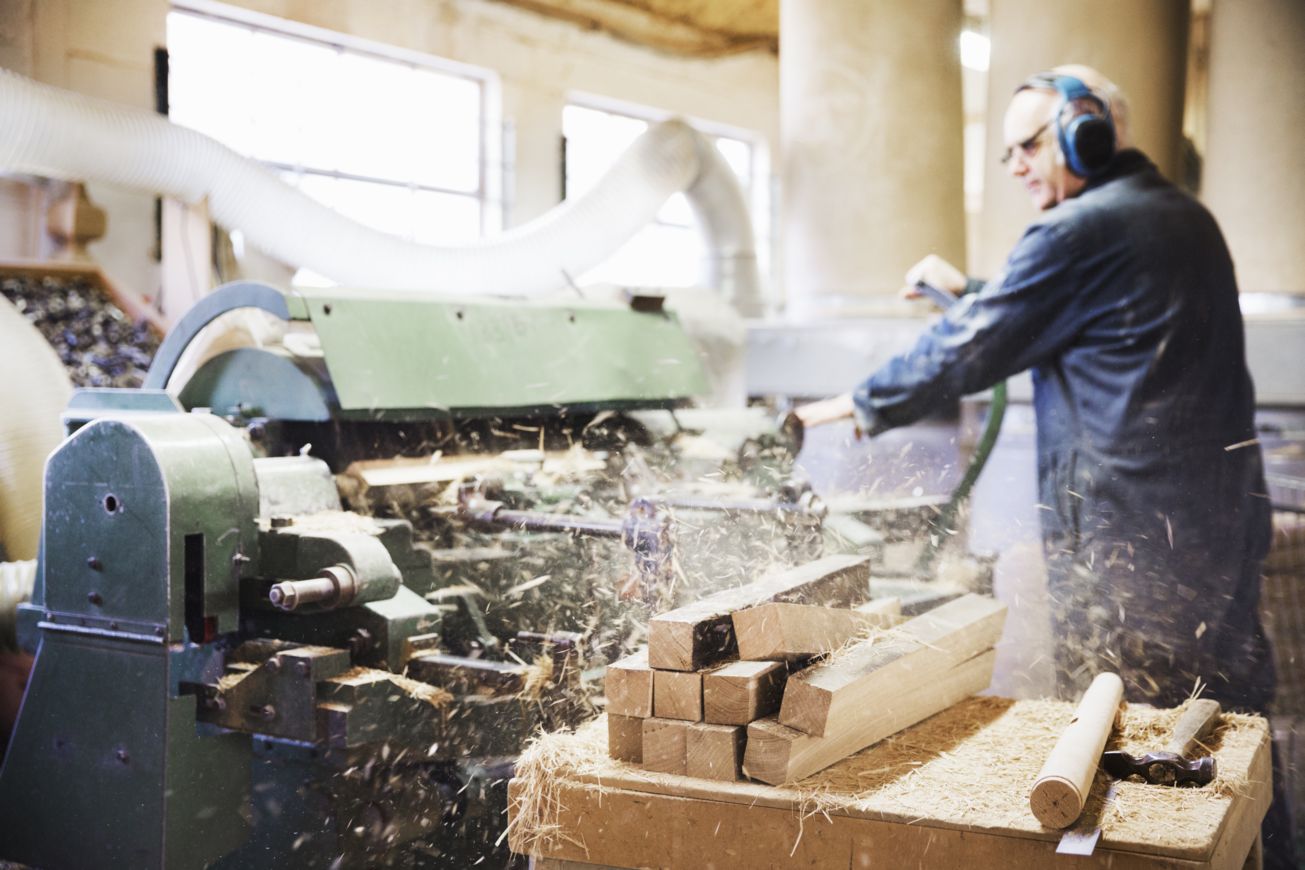
Practical examples
A carmaker and leather
If a carmaker buys bovine leather from a European tannery and uses it for seats, the finished car is no longer a ‘relevant product’. The carmaker is therefore neither an operator nor a trader. If it imported the leather directly from outside the EU, however, it would become an operator and would have to submit a DDS.
A farmer and soya
A farmer who buys soya meal in the EU and feeds it to hens is neither an operator nor a trader – they sell chickens, which do not fall under the EUDR. If they imported the soya themselves from a third country, however, they would be an operator and would have to meet the obligations, including the DDS. If they sell soya meal to another farmer, they become a trader.
A printing company and paper
A printing company that buys paper and sells printed products made from it is an operator and submits a DDS. If, however, the printer provides only a service (e.g. printing on paper owned by the customer), the EUDR obligation does not apply to it.
Furniture for own use
A company that imports wooden furniture directly from Brazil and uses it for its employees is an operator and must submit a DDS. If, however, it buys the furniture from an EU supplier that has already submitted a DDS, it has no further obligations.
Wood used for energy
A company that harvests its own forest and uses the wood only for heating or to generate electricity for itself is not affected by the EUDR – it places nothing on the market. If it sells wood chips to another company, however, it becomes an operator and must meet the full obligations.
Company C buys wood chips from an operator in the EU that has already carried out due diligence and submitted a DDS. If it uses the chips only as fuel to heat its own premises, there is no ‘placing on the market’. Company C is therefore not an entity covered by the EUDR, and the DDS obligations do not apply to it.
Do you want to be sure your company meets all current and future EUDR (EU 2023/1115) requirements?
See our services and practical support for the EUDR
News
EUDR update (21 October 2025)
The European Commission has presented a proposal for targeted amendments to ensure smooth and timely implementation of the EU Deforestation Regulation (EUDR).
The proposal introduces simplifications for smaller companies and adjusts obligations in the downstream part of the chain, while maintaining traceability and the goal of zero deforestation.
What’s new
- Downstream without a statement: manufacturers and distributors further down the chain will no longer have to submit their own due diligence statements; they rely on the first importer's documentation.
- Micro and small enterprises: instead of repeated statements, only a simple one-off declaration in the IT system (if the data already exist in a national database, they do not need to fill in anything).
- Deadlines (proposed):
- medium-sized and large companies: application from 30 Dec 2025 + a 6-month transition period for checks and enforcement,
- micro and small enterprises: application from 30 Dec 2026.
Who is affected and how
- Large and medium-sized companies: stay on course with implementation by the end of 2025; prepare for checks in the first half of 2026.
- Micro and small companies: simpler administration (a one-off declaration), but the obligation to ensure deforestation-free origin remains.
- Downstream operators: set up the internal flow of documentation so that it relies on the first importer’s statement.
Disclaimer
This is a Commission proposal for amendments, which must be approved by the European Parliament and the Council of the EU. If it is adopted, the changes and deadlines above will apply.
If it is not adopted, the previously approved arrangement remains in force: the EUDR applies from 30 Dec 2025 (large/medium-sized) and from 30 Jun 2026 (micro/small).
Official European Commission press release (21 October 2025)
Implementing rules and guidance (overview)
EUDR: Latest developments and the planned one-year delay – update as of 23 September 2025
The EU regulation EUDR (EU 2023/1115), which aims to prevent products linked to deforestation from being placed on the EU market, was due to apply to most companies from 30 Dec 2025. According to the latest statements of 23 September 2025, however, a planned one-year delay is taking shape.
Reason for the planned delay
The main reason is the capacity of the TRACES IT system, into which companies are to enter large amounts of data for due diligence statements (DDS).
The European Commission warns that the system could become overloaded shortly before go-live, putting its smooth operation at risk.
The Commissioner stressed that:
The European Union remains fully committed to fighting deforestation.
The proposed delay is not a response to pressure from abroad but purely to the technical risk of the system being overloaded.
The aim is to gain time to strengthen the IT infrastructure and to simplify processes for companies.
What it means for companies
EUDR obligations, in particular due diligence and DDS submission, are likely to be pushed back by one year.
A forthcoming minor amendment to the regulation is to change only the deadline; no other changes have been announced so far.
Companies should nevertheless continue their preparations: mapping suppliers, collecting geolocation data and setting up internal processes.